Turning a conversation into a legal draft in one workflow.
Kokorono creates family trusts. Until recently, its agents were copy-pasting their way through proposals and contracts, duplicating old documents, swapping names, hoping nothing slipped through. I built the internal tools that replaced all of that: structured workflows that turn family data into tailored legal drafts without the cut-and-paste.


What we built
A suite of internal tools for the in-house trust agents that takes structured family data (members, assets, inheritance rules and so forth) and produces a business proposal deck on one side and customized legal documents on the other. Built by a team of three with input from agents and legal advisors, we first shipped in 2021-2022, followed by a redesign in 2025. Used daily by 100+ people across the organization.
Navigating complexity
A single family trust can involve three generations of beneficiaries, ex-spouses and complex family relationships, real estate split across multiple prefectures, financial assets and a contract with sections that change depending on all of the above. We worked closely with our lawyers and agents to map every variable so we could build a system that can handle the intricacies of any scenario.
Making a WYSIWYG family tree builder.
The problem
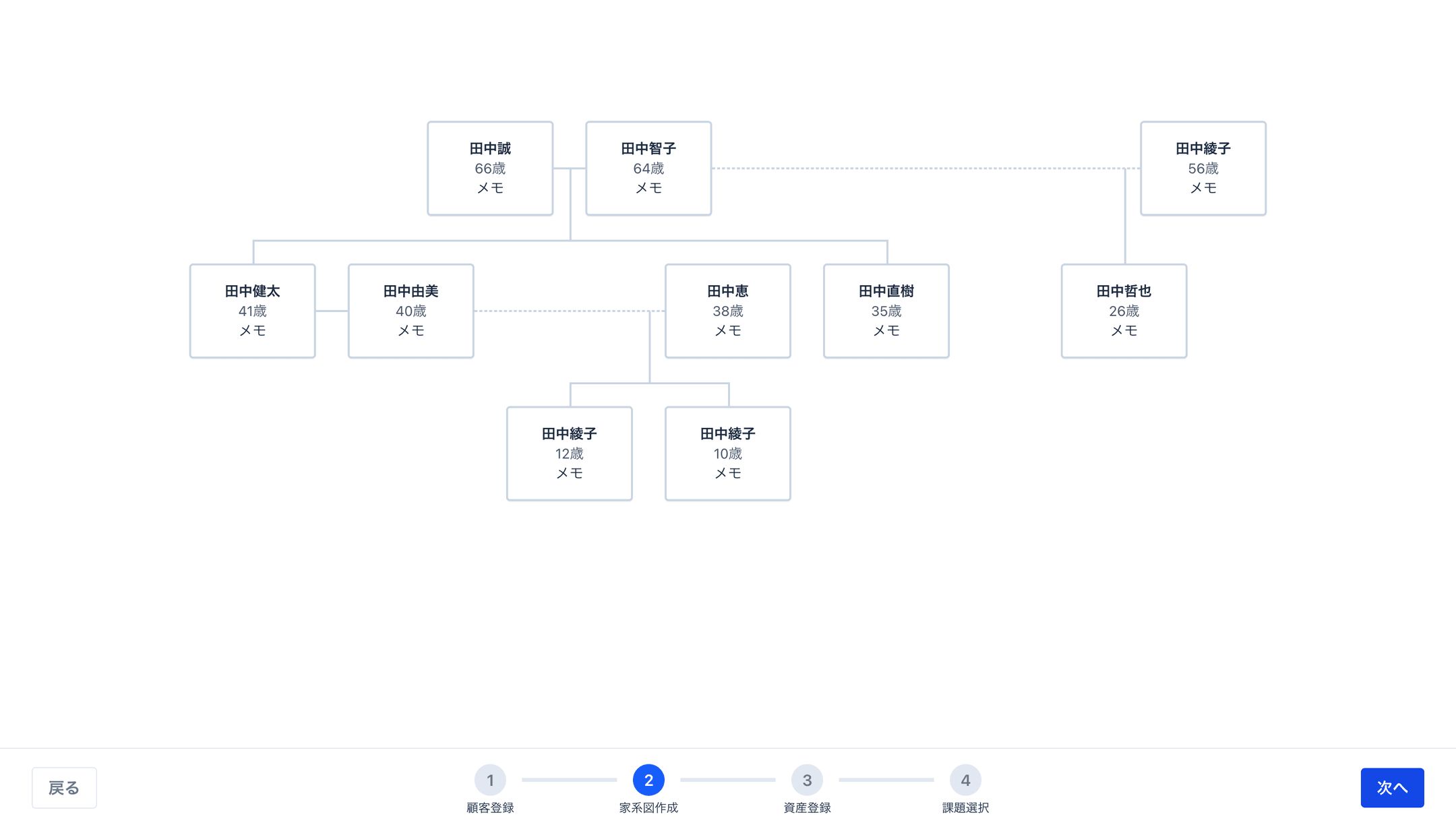
To further explain to our customers how to approach family trusts and inheritance, our agents were building tailored family trees in Google Slides for every client meeting: copying boxes from old decks, drawing lines manually, renaming, resizing. It was slow, inconsistent and error-prone so sadly also stressful. We looked for off-the-shelf solutions but org chart tools assume clean hierarchies. Real families, on the other hand, have ex-spouses, deceased members, and branches that grow in unpredictable directions. Every library we tried felt like we were fighting the tool more than we were building the feature.
The insight
Families break down into groups, and HTML's natural document flow handles groups well. Each family unit grows horizontally, pushing adjacent groups aside. The nested HTML tree maps almost directly to a nested family tree. The only thing CSS couldn't do at 100% was drawing the connecting lines between groups but a prototyping session showed us this was achievable with a (relatively) small amount of JavaScript.
What we built
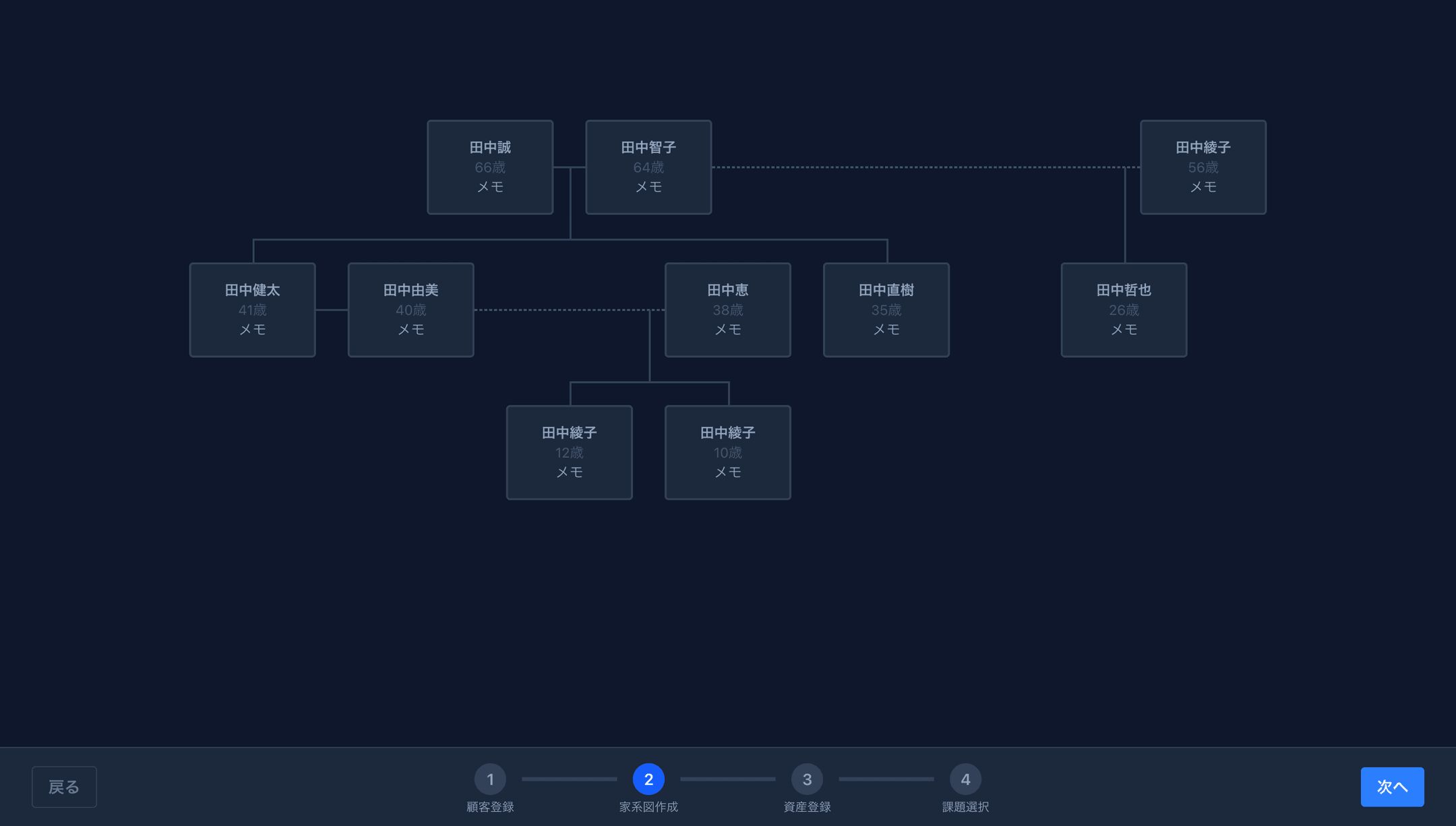
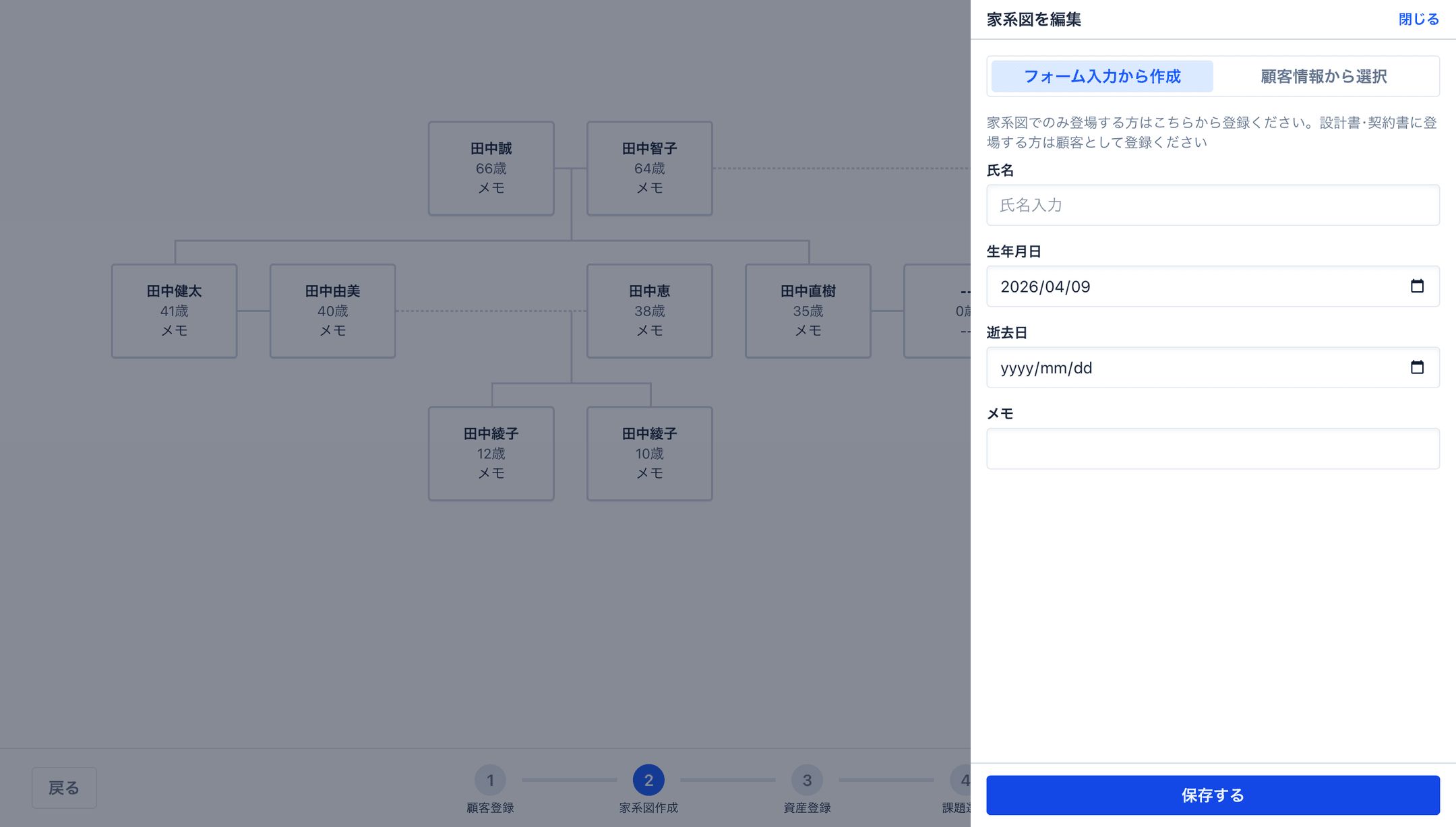
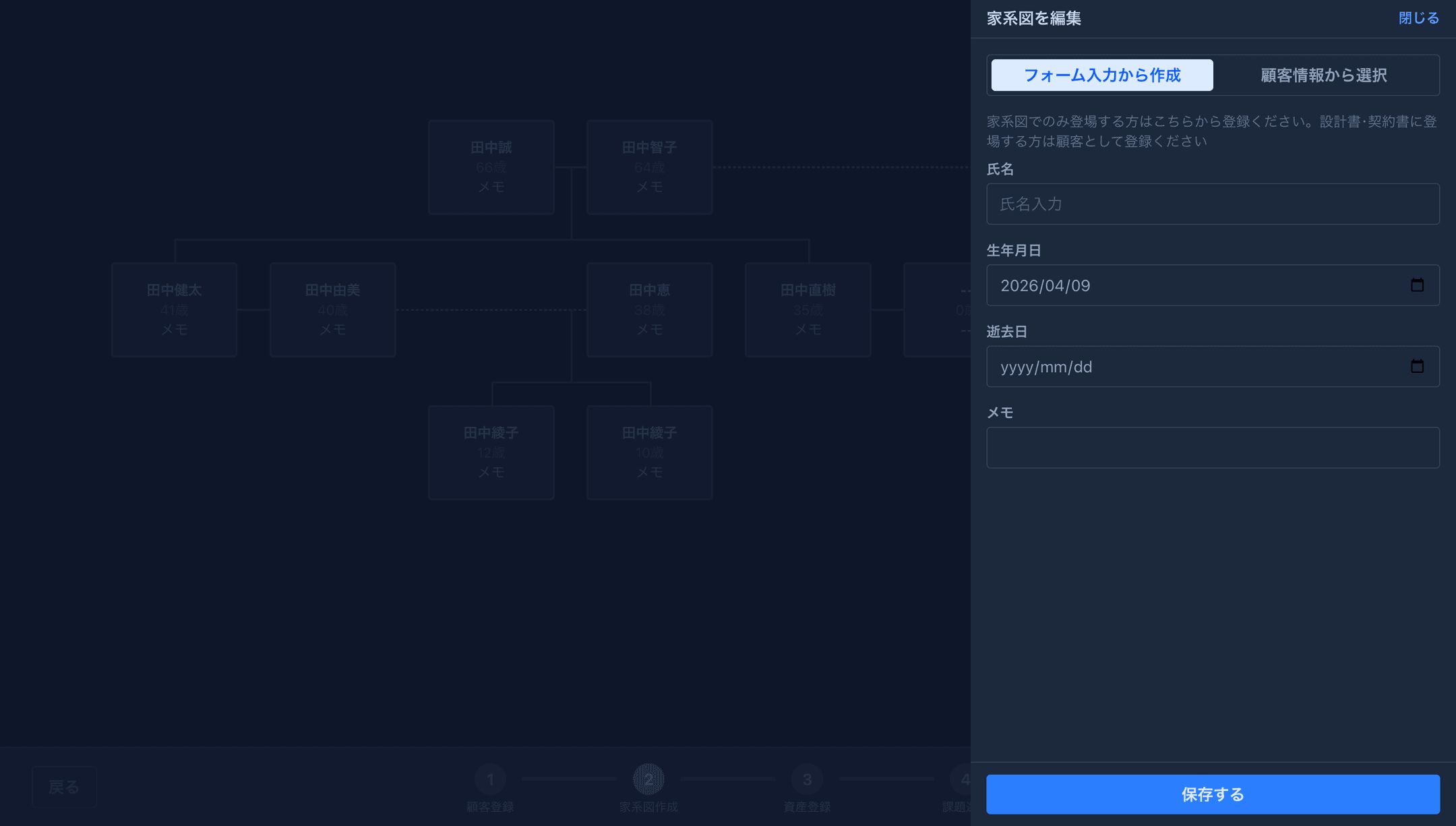
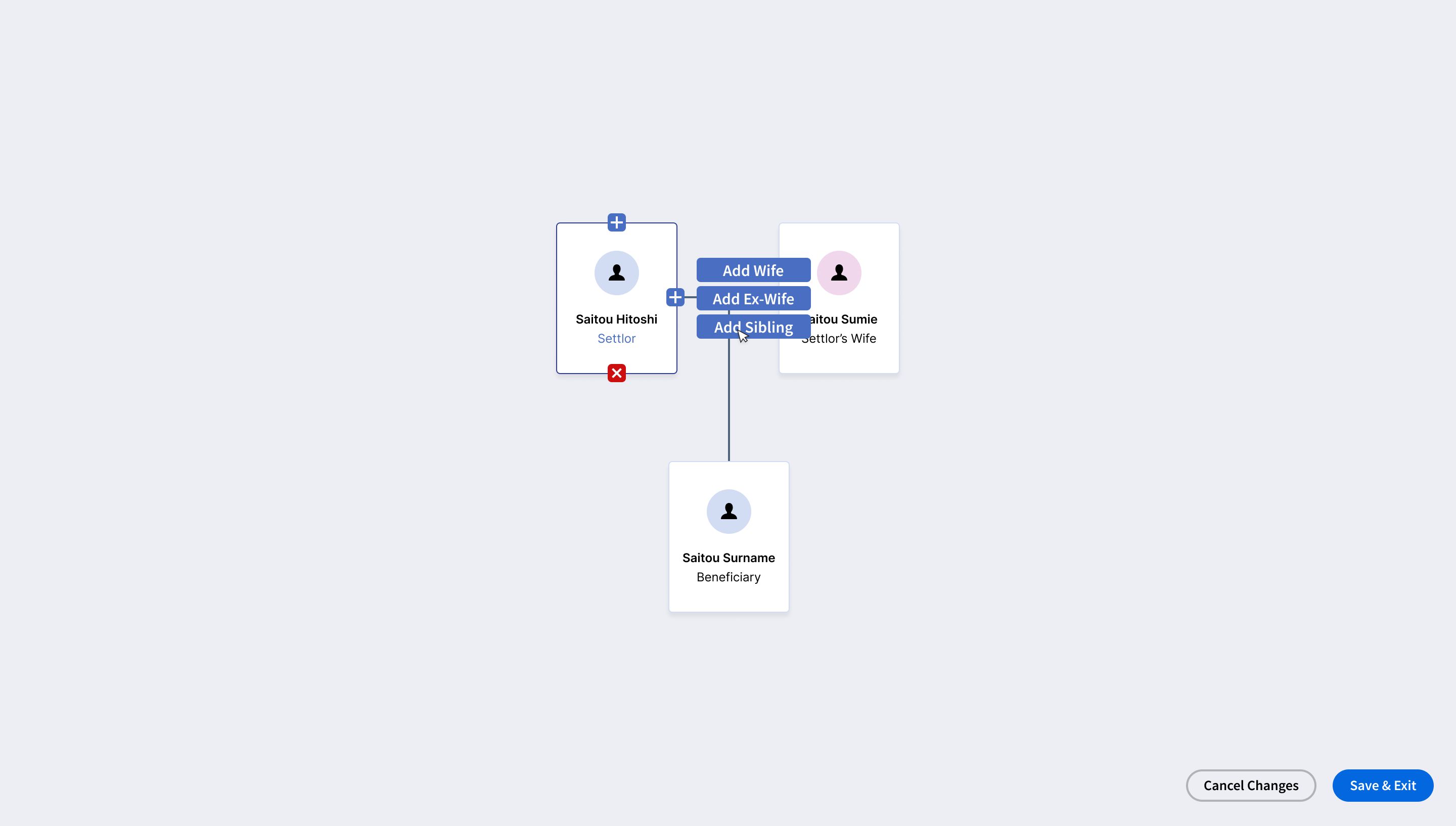
A lightweight family tree editor built with CSS and minimal JS. When agents reach the family tree step, the trust settlor is already on screen, pulled from CRM data entered earlier in the workflow. Agents add a spouse and/or ex-spouses, siblings, and descendants. Names autocomplete from existing contacts in the system making it extremely quick to put everything together.
The payoff
Agents entered family data once in the app, as part of their normal workflow. We were now able to generate consistent, accurate family trees automatically without the need to switch context and apps to achieve the same goal.
Streamlining contract drafting.
The problem
Our agents met families, gathered information, but couldn't produce even a first draft of the contract. The legal logic was too complex. Twenty-two article types, each with multiple versions depending on trust structure, asset mix, and beneficiary configurations. Some of the contract articles even depended on answers to multiple questions while others pulled from settings configured in entirely different parts of the app.
The approach
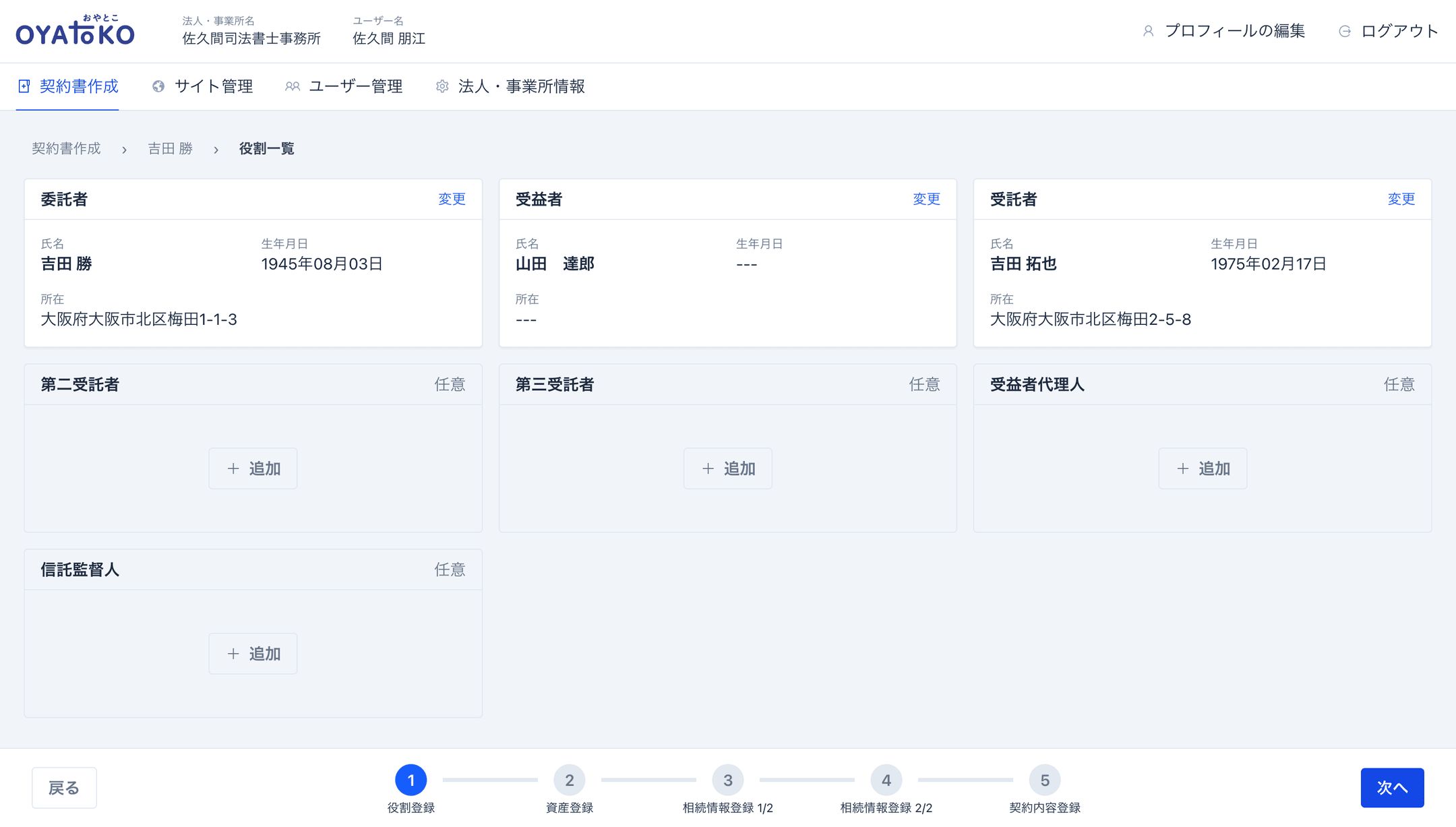
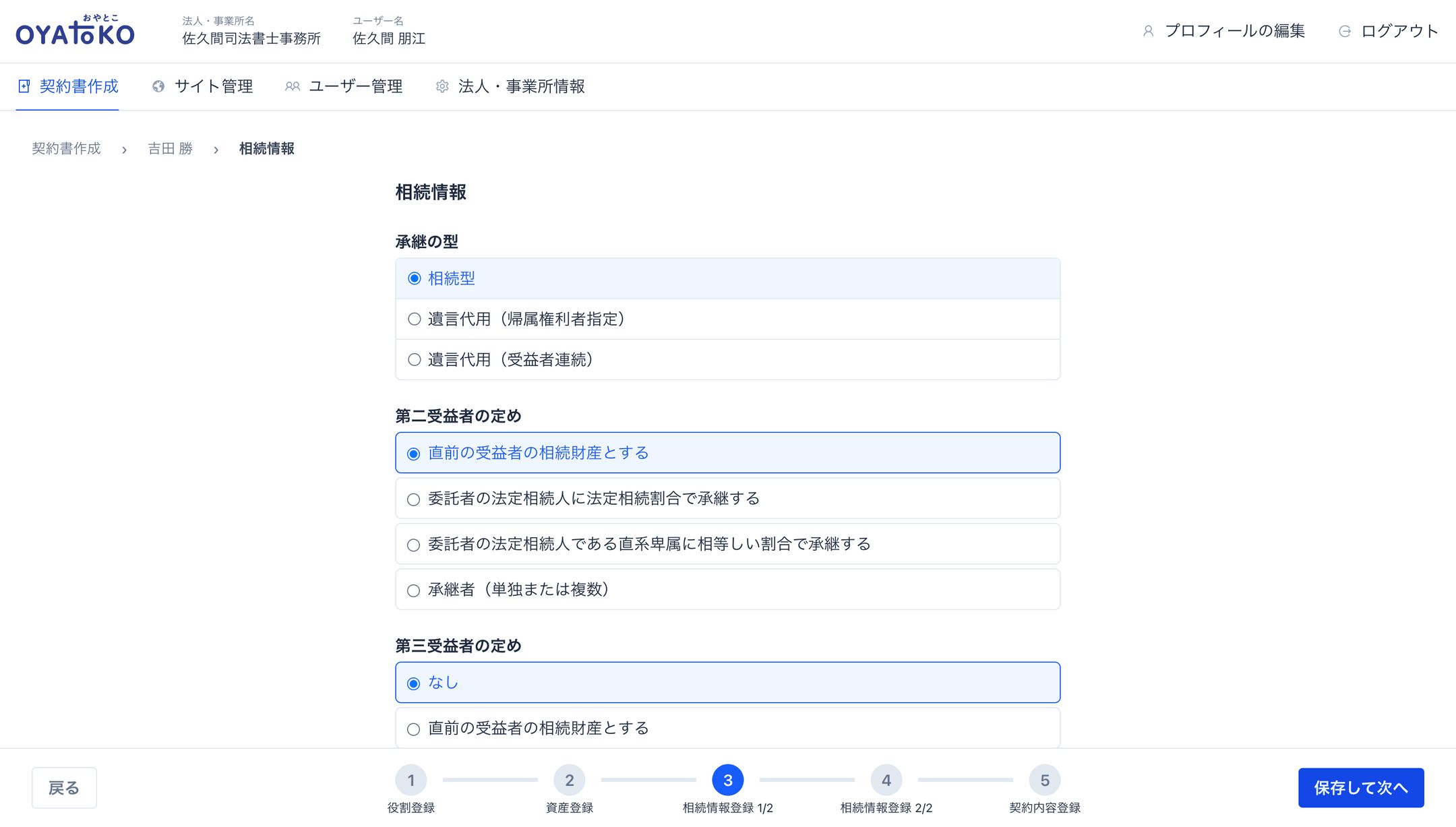
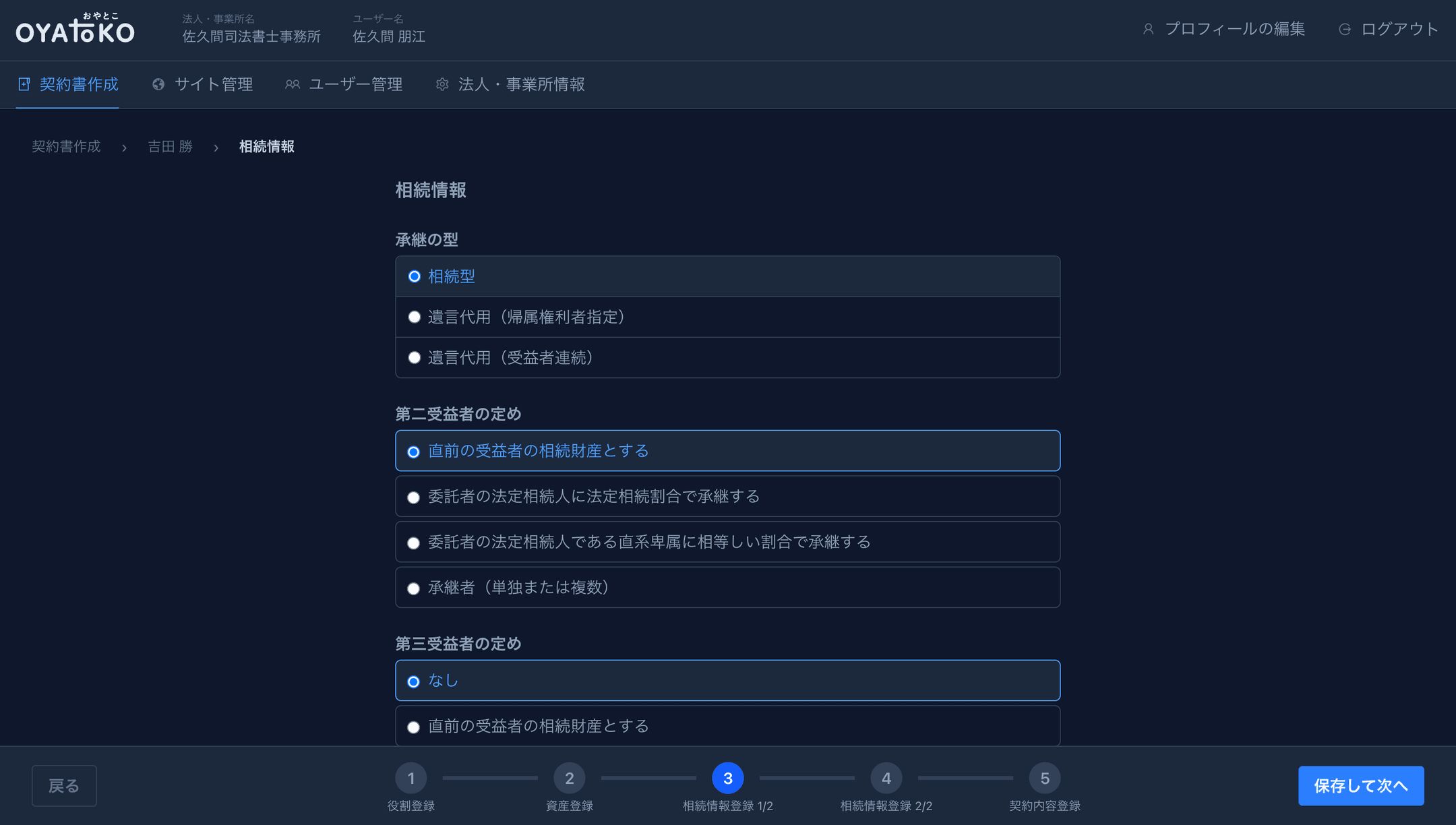
Working with legal advisors and experienced agents, we mapped every contract variable to a structured two-part questionnaire. The mapping was painstaking, a complex spreadsheet connecting configuration answers to the right article templates. The key realization was that despite the combinatorial complexity, the decision points could be broken into a sequential flow: role assignments, asset registration, inheritance & contract configuration, then contract terms.
What we built
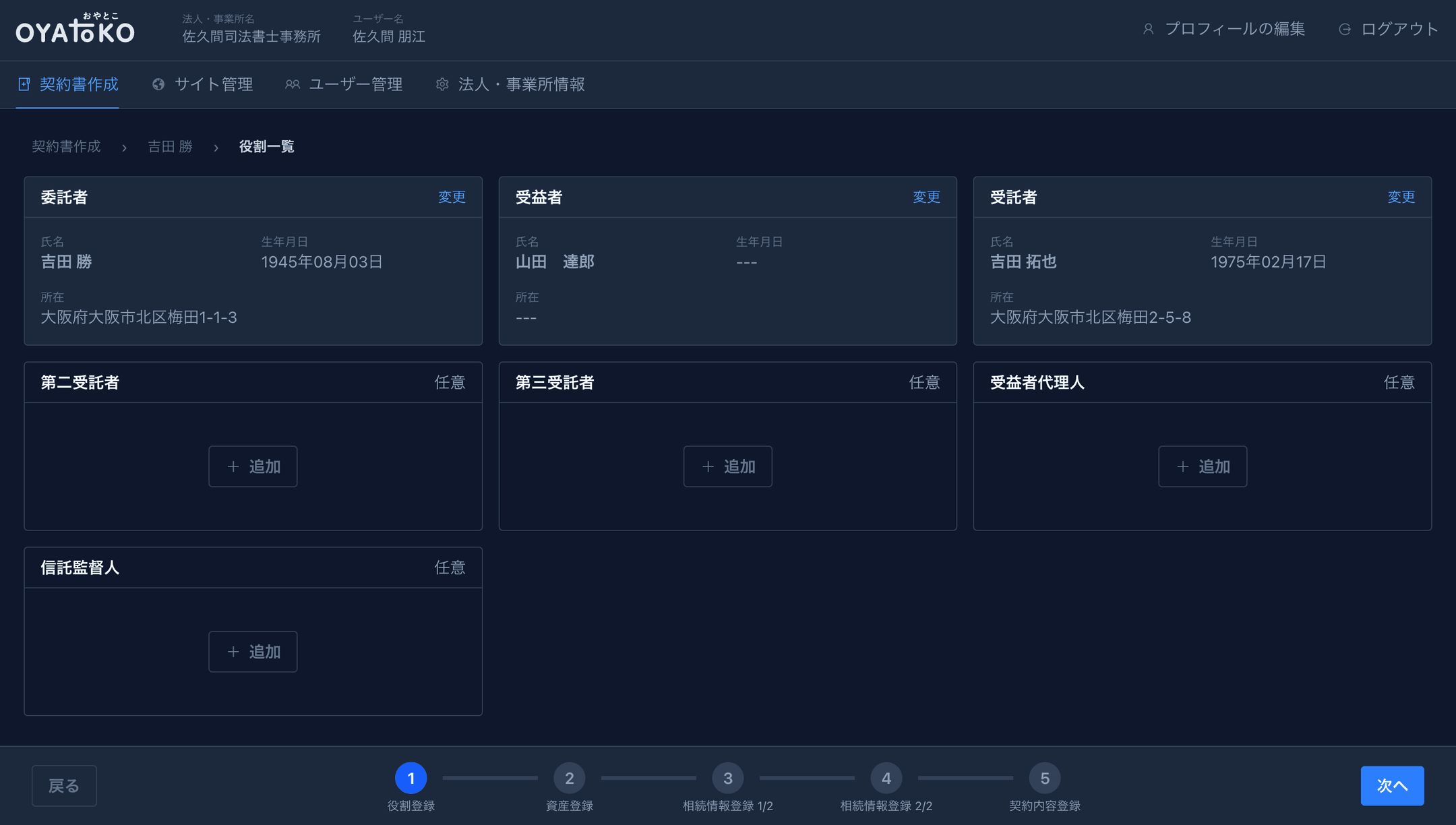
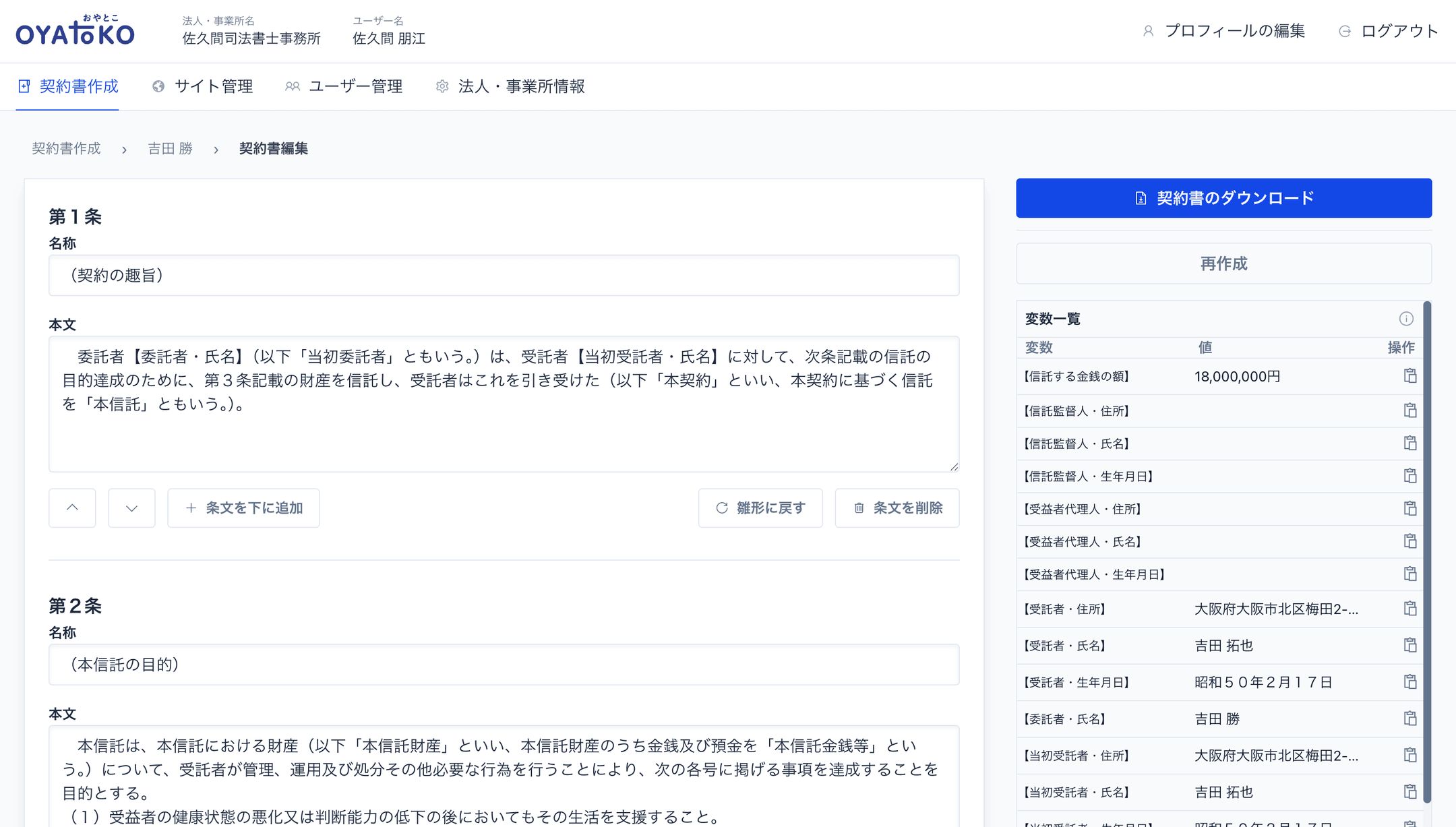
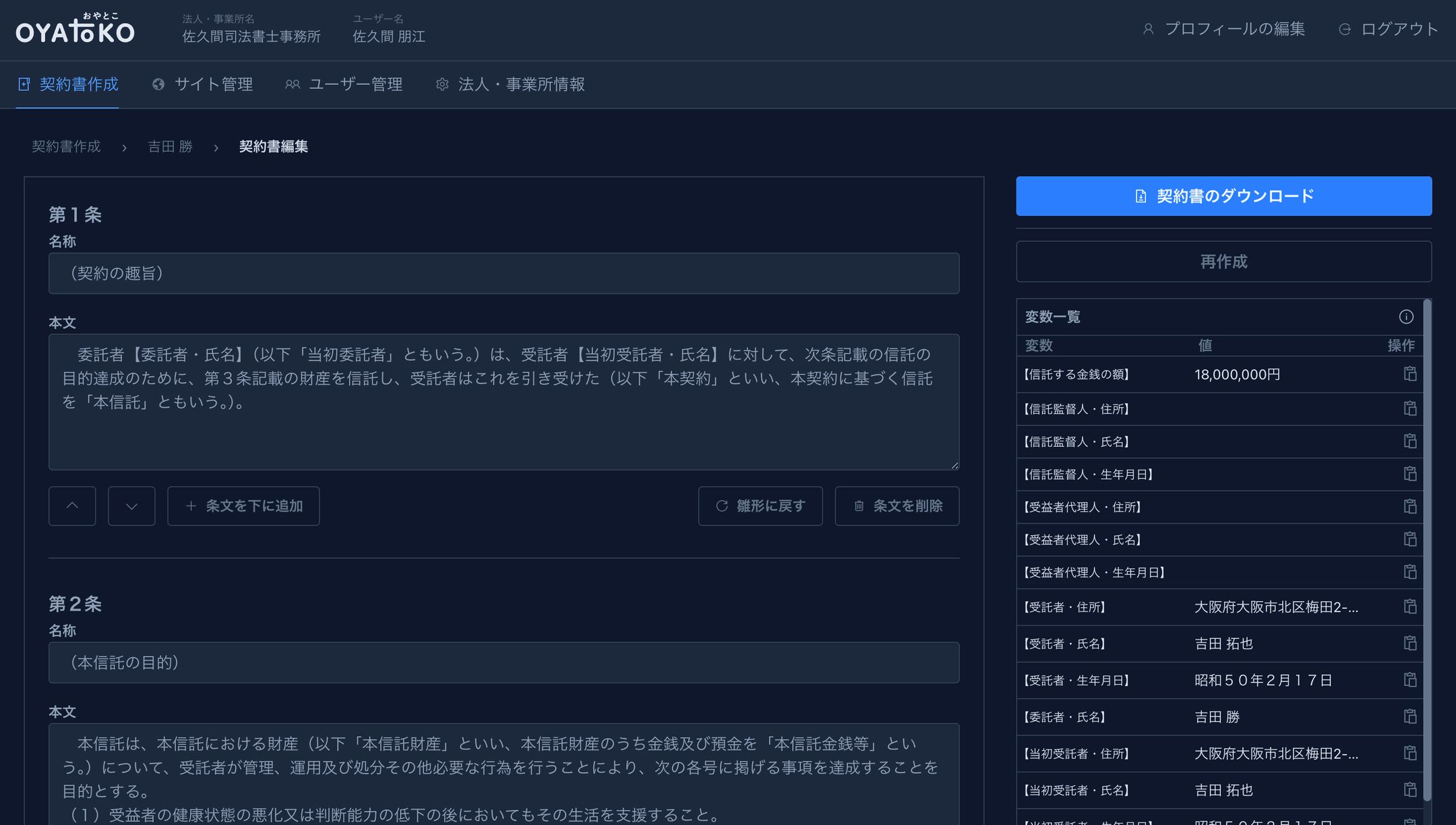
A step-by-step wizard that walks agents through the full contract configuration. At the end, they land on a contract builder screen showing every generated article. Variables like names, dates, and amounts appear as tokens. Edit a name in the variables list and it updates across all articles at once. Agents can edit article text freely but never have to manually insert client details. They generate PDF previews, tweak until satisfied, then hand the draft to a partner lawyer for review and approval.
The payoff
Agents now produce contract drafts themselves. Lawyers still own the final contract, but instead of studying a case from scratch and assembling a document, they review a structured draft that's already tailored to the family's situation. The heavy assembly work moved to the people who know the family best.
Conclusion
Two products, two design philosophies.
Alongside these internal tools, I also built Oyatoko's customer-facing app which has to work for everyone across ages and degrees of tech savviness.
On the other end of the spectrum, these internal tools serve professionals who know the domain and want speed over hand-holding. Working on both sides of the same product has been one of the most rewarding parts of this project.